
Plaster & Drywall Repair in Melbourne, Finished Invisibly
Walls take a beating in a lived-in home. Doorknobs, furniture knocks, hairline settlement cracks, and the cornice splits you get in older Melbourne houses all need fixing properly before any paint goes on. Paul Painting Melbourne repairs plaster and drywall to an invisible finish so the following paint job reads as one unbroken wall, not a patched-up afterthought.
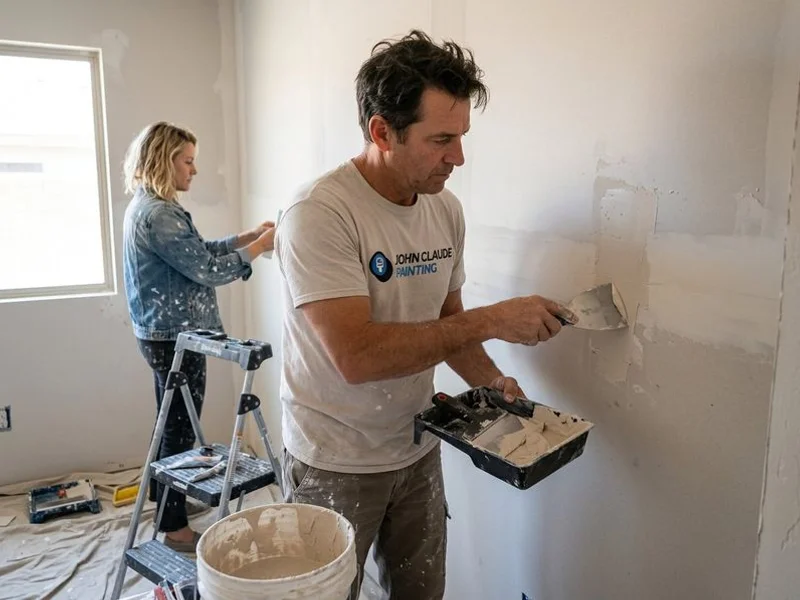
What's Included in Our Drywall Service
Our Drywall Process
Assess Damage
We evaluate the damage, determine the best repair method, and prepare the area with dust barriers and floor protection.
Repair & Finish
Patches are installed, joint compound is applied in multiple thin coats, sanded smooth, and texture is matched to the surrounding wall.
Prime & Ready
Repaired areas are primed and ready for painting, blending invisibly with the rest of your wall.
Get a Free Drywall Estimate
No obligation, no hidden fees. We'll assess your project and provide a detailed quote.
Wall Repairs That Disappear Under Fresh Paint
Every house picks up wall damage over the years. In Melbourne’s housing stock, the kinds of damage change depending on the era of the building. A 1990s brick veneer in Craigieburn might just need a few doorknob holes patched. A Victorian terrace in Carlton might have lath-and-plaster cracks, cornice damage, and historic movement cracks that were painted over fifteen years ago and are now showing again. Our job is to match the repair to the wall, not the wall to the repair.
What We See Most Often Across Melbourne
- Doorknob and furniture impact damage. Small to medium holes from everyday life.
- Hairline settlement cracks. Common in older Fitzroy, Richmond, and Port Melbourne homes where decades of foundation movement keep producing new cracks.
- Ceiling cornice splits. Especially in heritage terraces where original lath-and-plaster cornices have separated from the ceiling sheet.
- Water-damaged plaster. From leaking roofs, bathroom overflows, or burst pipes. These panels nearly always need cutting out and replacing.
- Wallpaper removal tears. Modern renovators stripping old wallpaper often expose torn and pitted wall surfaces that need full skim coating before paint.
- Picture hook holes by the dozen. End-of-lease repaints are full of them.
Our Repair Method
We work in thin, controlled passes rather than dumping a heavy layer of filler and sanding it back. That is what separates a repair that holds up from one that shows up as a dimple or halo the moment the light hits it sideways. On a standard patch we will:
- Square up the damaged area or cut out any loose material.
- Fit a backing board or plaster patch where needed, screwed to existing framing.
- Tape and first-coat with setting compound, feathered well beyond the repair.
- Apply a second thinner pass once the first is dry, widening the feather further.
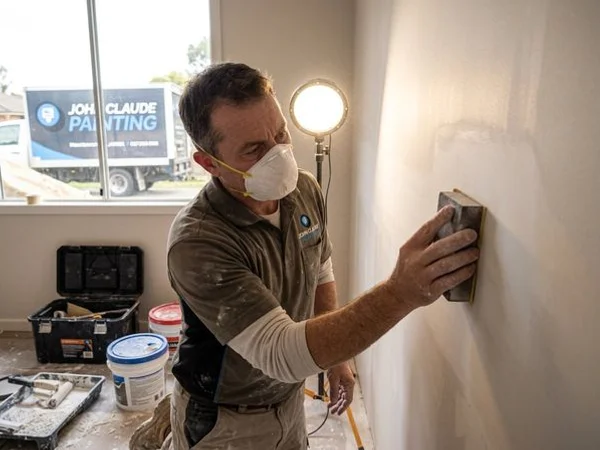
- Sand flat with a dust-controlled sander, spot-prime, and leave it ready for paint.
Heritage and Ornate Plaster
Our senior painter spends a lot of time working in Melbourne’s heritage housing stock, where a standard modern drywall repair simply will not pass. Ornate ceiling roses, pressed-metal panels, Victorian cornices, and decorative picture rails all need to be matched to the existing profile, often by hand, and coloured to blend with decades of ageing. If your home is heritage-listed or sits under an overlay, we are comfortable working within those constraints and can advise on what is and is not reversible.
Skim Coating for a Fully Smooth Wall
Lots of 1990s and early 2000s Melbourne homes used textured wall and ceiling finishes. They age poorly and date a room hard. We strip or skim coat over those surfaces with a thin, uniform pass of setting compound, producing a modern, flat finish ready for new paint. Skim coating is also our default solution when a wall has been through multiple patch jobs over the years and is no longer visually consistent.
When a Repair Is Not Enough
Sometimes a section of wall or ceiling is too far gone for patching. Water damage that has reached the plasterboard paper layer, old lath and plaster that is pulling away from its supports, or ceiling sags from historic leaks usually need the affected area cut out and replaced with fresh sheet. We are upfront when that is the case, rather than patching over it and letting the problem return in twelve months.
Paired With Painting So You Only Need One Crew
Most of our repair jobs finish with a paint pass on the same wall or whole room, so you end up with one invoice, one project manager, and one finished result. For end-of-lease preparations, pre-sale touch-ups across Melbourne, or mid-renovation work alongside your builder, we coordinate the sequence directly with you or with your trades.
Service Area
Paul Painting Melbourne repairs plaster and drywall across the full metro area, from heritage inner suburbs like Fitzroy, Carlton, Richmond, and South Yarra, out to Brighton, Port Melbourne, Williamstown, and through to Dandenong, Frankston, Craigieburn, and Werribee. Call 03-9876 3654 to book a free inspection.
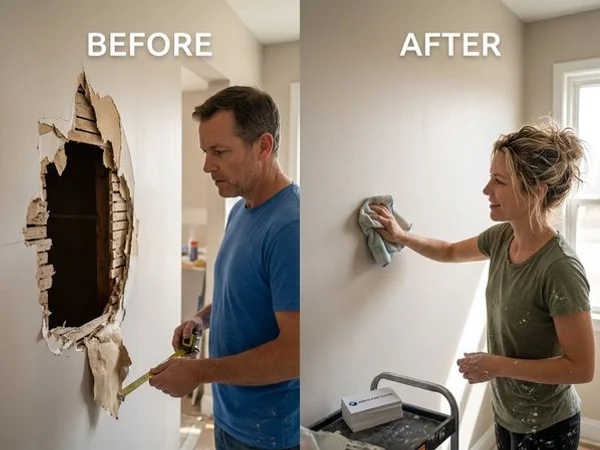
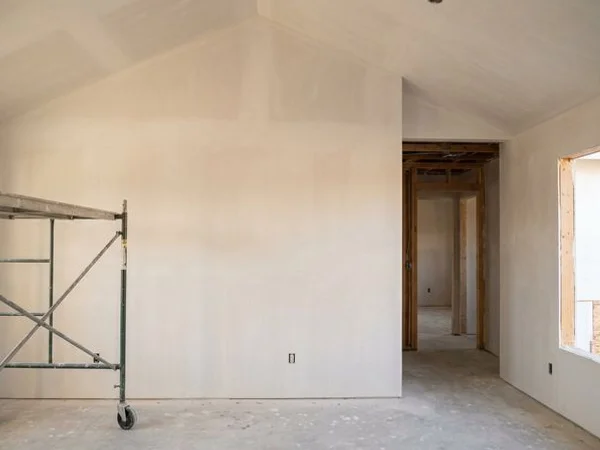
Drywall Project Gallery
Drywall FAQs
Can you match old pressed-metal ceilings and ornate cornices?
Yes. Our senior painter is a heritage restoration specialist and has repaired Victorian and Edwardian cornices, pressed-metal ceilings, and decorative plaster moulding across inner Melbourne. We colour-match and blend repairs so they are invisible against the surrounding original work.
Do you paint after the repair, or is that a separate trade?
We handle both in a single project. After the plaster or drywall repair is set and sanded, we prime the patched area and repaint the wall or whole room so the fix is fully hidden. One crew, one project manager, no gaps between trades.
How long does a typical repair take?
Small patches can be done in a day. Bigger repairs involving multiple passes of setting compound take two to three days because each coat needs correct drying time before the next. We always give you a clear schedule before starting.
Related Services
Cabinet & Trim Repainting Specialists
Factory-smooth cabinet and trim repainting for Melbourne kitchens, with hand-sanded prep and HVLP spray finishes that handle daily family use.
Interior Painting for Melbourne Homes
Premium interior house painting in Melbourne with deep preparation, low-VOC paint options, and a finish that suits everything from heritage terraces to modern apartments.
Get Your Free Drywall Estimate
Contact us today for a free, no-obligation estimate. We'll visit your property and provide a detailed quote.