Low-VOC Paints: A Healthier Choice for Melbourne Families

Think about the last time you walked into a freshly painted room. That sharp chemical smell you probably associate with “new paint” is actually a mild warning signal. It is the scent of volatile organic compounds (VOCs) evaporating into the air.
For families with young kids, asthma sufferers, pregnant mums, or indoor pets, that matters more than the brand on the tin or the colour on the chip card. The good news is that modern interior painting products have come a long way, and you no longer have to choose between a durable finish and clean indoor air.
Here is how Paul Painting Melbourne thinks about paint chemistry, what to actually ask for at the paint shop, and which products we reach for when a client has real health concerns.
What VOCs Actually Are
Volatile Organic Compounds are carbon-based chemicals that evaporate at room temperature. Traditional paints use them as solvents to keep the product liquid in the tin and to help the coating level out on the wall.
Once the paint is applied, those solvents evaporate into your living space. This process is called off-gassing, and while the strongest smell usually fades within a few days, low-level emissions can continue for weeks or months afterwards.
Common health impacts of higher VOC exposure include:
- Headaches and nausea
- Respiratory irritation, especially for asthma sufferers
- Skin and eye irritation
- Worsening of symptoms for people with chemical sensitivities
The NSW Environment Protection Authority and Australian Standard AS 2311 both recognise VOCs as indoor air quality pollutants worth managing.
Low-VOC, Zero-VOC, and What the Numbers Mean
Paint tins throw around terms like “low-VOC”, “zero-VOC” and “low-odour” fairly loosely. The measurable standard is grams per litre (g/L).
| Category | Typical VOC (g/L) | Smell | Typical Use |
|---|---|---|---|
| Traditional oil-based enamel | 250 to 500 | Strong, lingering | Outdoor trims, industrial metals |
| Standard waterborne | 50 to 150 | Noticeable | General trade work |
| Low-VOC | Under 50 | Mild | Living rooms, hallways |
| Zero-VOC | Under 5 | Barely detectable | Nurseries, bedrooms, hospitals |
The Tinting Trap
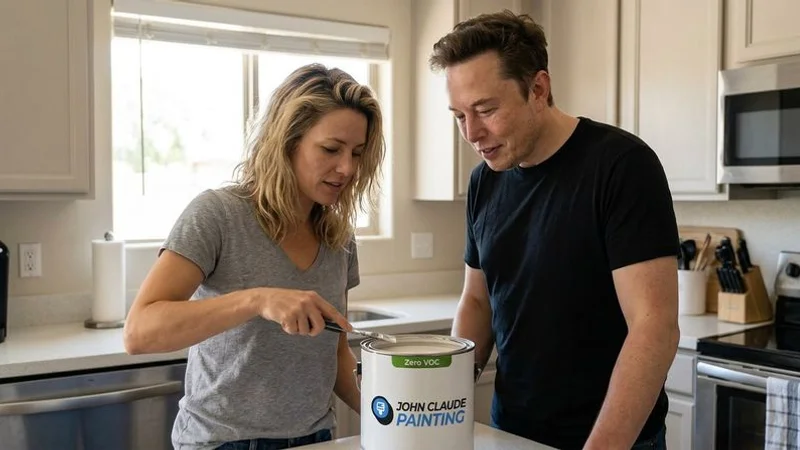
Here is the detail that catches a lot of homeowners by surprise. A “zero-VOC” claim on the tin usually applies to the base paint only, before colour is added. Many universal colourants still use glycol-based solvents that push VOC levels back up when you ask for a deep navy or a rich forest green.
The workaround is to specifically ask the paint shop to tint with zero-VOC colourants. Major Australian brands have products that avoid this trap:
- Dulux Professional Envirosolutions waterborne range uses low-VOC colourants.
- Haymes Expressions Zero Elite uses a zero-VOC tint system, even for dark colours.
If you care about air quality, confirm with the paint shop or your painter that the tinting system is part of the zero-VOC claim, not just the base.
Do Low-VOC Paints Perform as Well as Traditional Ones?
This is the question we hear on every interior consult. The honest answer used to be “not quite”. A decade ago, eco-friendly paints were genuinely thinner, required extra coats, and scuffed easily.
That gap has largely closed. Modern waterborne technology produces zero-VOC products that match or exceed the durability, hide, and washability of older solvent-heavy formulas.
Our Go-To Low and Zero VOC Products
After years of using them in Melbourne homes, these are the products we recommend most:
- Dulux Wash&Wear +Plus Kitchen & Bathroom. Low VOC, anti-mould, fully washable. Perfect for wet areas and high-traffic family homes.
- Dulux Envirosolutions Professional. The zero-VOC line we spec on hospitals, childcare, and homes where someone has acute chemical sensitivity.
- Haymes Expressions Zero Elite. Victorian-made, true zero-VOC with matching zero-VOC tints. Beautiful finish, strong washability.
- Taubmans Endure. Low VOC with anti-microbial properties, a good mid-price option for family homes.
All four will hold up to daily family life without compromising the air your kids are breathing overnight.
What You Can Realistically Expect
From a modern low or zero VOC product:
- Full washability within a week of application.
- Two-coat coverage on most wall-repaint scenarios (colour changes may still need three).
- Same-day re-entry to the room with no respiratory complaints.
- No lingering smell after 24 to 48 hours.
Why This Matters in Melbourne Specifically
Melbourne homes tend to be sealed tighter than homes in more temperate parts of the country. Through winter we run heaters, close doors to keep rooms warm, and generally ventilate less than we should.
That has a real effect on VOC exposure. Chemicals that would air out in a day in a well-ventilated northern Queensland home hang around much longer in a tightly sealed Richmond terrace. The net result is that indoor air pollution accumulates faster and stays elevated longer.
This tips the scales heavily in favour of low-VOC products when:
- Young children sleep in the freshly painted room.
- A family member has asthma, allergies, or chemical sensitivities.
- The occupants cannot easily move out during the project.
- The repaint is happening in winter, when opening windows is genuinely uncomfortable.
- The home has a newborn baby or someone undergoing cancer treatment.
The Trapped-Air Problem
Modern Melbourne homes are also being built to higher energy-efficiency standards, which means they are noticeably more airtight than older builds. Good for heating bills. Less good for off-gassing because whatever the paint releases has nowhere to go.
Practical Tips to Minimise Exposure Even Further
Even with a low-VOC product, a few simple habits make the first week much more comfortable:
- Ventilate where you can. Open a window and crack the door to create even minimal cross-flow during and immediately after painting.
- Paint the bedrooms first thing in the morning. Give the room the full day and evening to air out before bedtime.
- Run an air purifier with an activated carbon filter for the first 48 hours if anyone is sensitive.
- Keep pets out of freshly painted rooms for the first 24 hours, especially smaller pets and birds that are more sensitive to airborne chemicals.
- Choose matt or low-sheen finishes where possible. They typically contain slightly fewer solvents than high-gloss enamels.
How We Approach It on Your Project
At Paul Painting Melbourne we default to waterborne products for all interior work, and we move to zero-VOC lines whenever a client has specific health concerns. When you book a consultation, we will ask up front about:
- Who lives in the home and any relevant health conditions
- Whether the project will happen with the family in residence
- Which rooms are highest priority for minimal off-gassing
- Your colour preferences, so we can match them to products with compatible tinting systems
If you would like to talk through safer paint options for your home, contact Paul Painting Melbourne and we will put together a quote that is both beautiful and healthy to live with.
Paul Painting Melbourne Team
Dulux Accredited Painting Contractor
Need Professional Painting Help?
Get a free, no-obligation estimate from our experienced team.
Get Free Estimate