What Does an Exterior House Repaint Actually Cost in Melbourne?
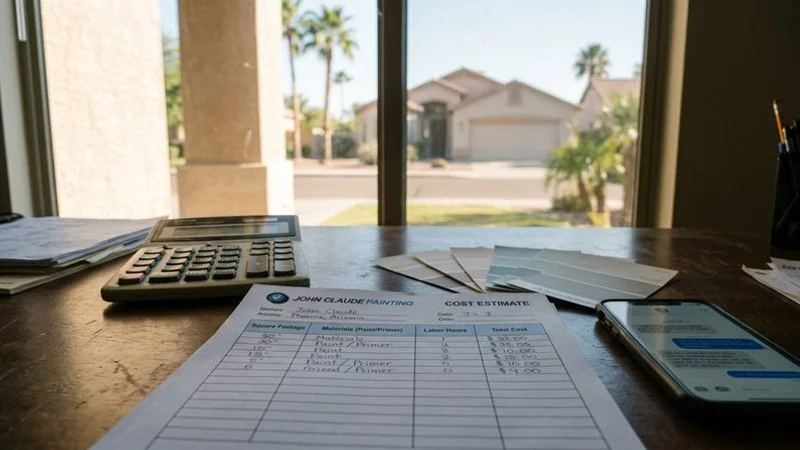
The single most common question we get on first-contact calls at Paul Painting Melbourne is “roughly what am I looking at for the outside of the house?” And the honest answer is always: it depends, but we can get you close.
The range of prices for exterior painting in this city is wide because Melbourne housing stock is wide. A single-storey weatherboard cottage in Northcote is a completely different job from a two-storey rendered double-fronted Edwardian in Hawthorn, and both differ again from a 1980s brick-veneer in the outer east.
Here is an honest look at what a professional exterior repaint costs in Melbourne in 2026, where the money actually goes, and how to compare quotes without getting burned.
2026 Price Ranges for Melbourne
For a full exterior repaint including walls, eaves, fascias, gutters, windows and doors, Melbourne homeowners in 2026 should expect to see quotes in these ballpark ranges.
| Home Type | Realistic Quote Range | Typical Crew Time |
|---|---|---|
| Small weatherboard cottage (2 bed, single storey) | $6,500 to $11,000 | 5 to 8 days |
| Medium home (3 to 4 bed, single storey) | $9,500 to $17,000 | 7 to 12 days |
| Large home (4+ bed, single storey) | $15,000 to $25,000 | 10 to 15 days |
| Two-storey home (moderate size) | $18,000 to $32,000 | 12 to 18 days |
| Two-storey period or Edwardian | $22,000 to $45,000 | 15 to 25 days |
These numbers assume a quality 100% acrylic paint system, proper surface preparation, and a reputable VBA-registered painter with full public liability and WorkCover. A quote that is significantly below this range almost always means something important has been left out.
The Per-Square-Metre Rule of Thumb
Most Melbourne painters will price at roughly $18 to $45 per square metre of paintable wall surface. The low end is reserved for flat, straightforward rendered walls in good condition. The high end applies to heavily detailed weatherboard or period homes with lots of timber profiles to cut in.
For quick mental arithmetic, a typical three-bedroom single-storey home has around 250 to 350 square metres of paintable wall surface once you include eaves, fascias, and trim.
What Actually Drives the Price
Square metres alone do not tell the whole story. Four factors move the number more than anything else.
1. Substrate Condition
This is the single biggest variable, and the one most likely to separate a cheap quote from an honest one.
- Level 1 (Good): Washing, minor filling, spot priming, and two topcoats. Base price.
- Level 2 (Moderate): Some scraping, sanding of lifting paint, caulking perished joints, a few render hairline cracks. Add 15 to 25%.
- Level 3 (Serious): Major scraping, timber rot replacement, rebuilding drummy render sections, pH sealing fresh patches. Add 30 to 60%.
A painter who walks your property and genuinely assesses the condition will price at the right level. A painter who quotes off a drive-by or a phone call is guessing, and guessing usually means surprises later.
2. Substrate Type
Melbourne has a full mix of exterior materials, each with different labour costs.
- Rendered masonry. Moderate pricing; back-rolling needed to fill texture. Covers fast if in good condition.
- Weatherboard. Higher labour cost due to profile cutting and edges; every board needs its edge worked.
- Fibre cement sheet. Fast to paint but joints and fixings need careful prep.
- Brick veneer. Usually only painted on eaves, fascias, and trim. Lower total cost.
- Heritage timber features. Victorian and Edwardian decorative timber (brackets, finials, lacework) is genuinely slow work.
3. Access and Height
Two-storey homes are not twice as expensive as single-storey; they are often 1.5 to 2.5 times more expensive because of access.
- Single-storey with clear ground: Ladder work only. Base pricing.
- Two-storey with clear ground: Scaffold along key elevations. Add $2,000 to $6,000 for hire.
- Heritage-overlay homes with protected gardens: Scaffold with special ground protection. Add a premium.
- Steep or constrained blocks: Additional scaffold sections; longer set-up time.
The other access factor is how easy it is to reach the back of the house. A standard Melbourne terrace with a rear laneway is easy. A home on a battle-axe block with a narrow side passage is not.
4. Paint Specification
Material is only 15 to 20% of a total quote, but it is a significant driver of how long the job will last.
- Mid-range 100% acrylic (for example, Dulux Weathershield Lo-Sheen): excellent performance, 8 to 12 year life on Melbourne exteriors.
- Premium acrylic (for example, Dulux Weathershield High Gloss or Haymes Ultra Premium Solashield): adds $300 to $700 to a typical job, extends life by 2 to 3 years.
- Elastomeric system (for example, Dulux Acratex): 25 to 35% more per litre than standard acrylic, bridges hairline cracks on render, 12 to 15 year life.
Saving $600 on paint to lose three years of service life is almost always a bad trade.
Melbourne-Specific Issues That Affect Quotes
Weatherboard Timber Rot
Melbourne’s old weatherboard homes, particularly Victorian and Edwardian stock, often have some degree of timber rot along south-facing walls, around window sills, and at fascia ends. A good painter will flag rotten sections in the initial inspection and include repair or replacement in the written quote.
Timber repair adds roughly $80 to $200 per linear metre of replacement depending on the profile.
Render Cracking
Almost every rendered home in Melbourne over 15 years old has some hairline cracking, and many have at least one “drummy” section where the render has lost bond with the substrate. Repair ranges from $25 per linear metre for hairline crack routing and filling to $150 to $400 per square metre for drummy section replacement.
Homes with persistent movement cracks are good candidates for a flexible elastomeric topcoat that bridges minor movement. It adds cost upfront but often eliminates the next cycle of crack repairs.
Heritage Overlay Homes
If your home is in a heritage overlay (large parts of Fitzroy, Carlton, East Melbourne, South Melbourne, Albert Park, Hawthorn and Kew), colour choices may be restricted and council may require heritage-appropriate finishes. We handle the approvals process as part of the quote.
Lead Paint in Pre-1970s Homes
Homes built before about 1970 may have lead-based paint in their older layers. Sanding or scraping without proper containment is illegal for a commercial painter and genuinely dangerous for occupants. Proper lead-safe prep adds cost but it is not optional. Be suspicious of any quote on an old home that does not mention it.
What a Good Quote Should Include
An honest Melbourne exterior quote should spell out:
- Named products (for example, “Dulux Weathershield Lo-Sheen in Surfmist”), not just “premium paint”.
- Coat count per element: most jobs should be one undercoat plus two topcoats on walls, and a minimum of two finish coats on trim.
- Specific prep steps: wash method, scrape level, sand level, crack repair, sealant renewal, priming.
- Access details: scaffold, EWP, or ladder work; who hires and who moves it.
- Scope: which elements are included (walls, eaves, fascias, gutters, windows, doors, garage door) and which are excluded.
- Warranty: written, minimum 5 years, ideally 10 to 15 years on premium systems with a Dulux Accredited contractor.
- Payment schedule: 10% deposit maximum under Victorian law, progress payments tied to milestones, not a single upfront payment.
If any of those are missing, ask before signing.
Red Flag Quotes
Watch for these patterns, because they all end badly:
- A quote that is 30 to 40% cheaper than the others. The cheap quote is almost always missing prep, scaffolding, or using a lower-grade product.
- “Two coats” with no product named. Two coats of what? Over what prep?
- Pressure to sign the same day. Legitimate painters are comfortable giving you time to think.
- A deposit over 10% of the contract value. Victorian law caps it at 10% for domestic painting work.
- No VBA registration number provided. Jobs over $10,000 in Victoria require VBA registration. It is not optional.
Getting an Accurate Quote
The only reliable way to get a useful number is to have a painter walk the property in person and look at the walls up close. A phone or email quote is a wild guess no matter how experienced the contractor is.
When we visit for an exterior quote, we usually spend 30 to 60 minutes on site checking substrate condition, taking measurements, noting access constraints, and discussing colour and product options. We then put together a written quote with everything spelled out, usually within two to three days.
Contact Paul Painting Melbourne to book a free on-site assessment. We will give you an honest read on what your home actually needs, which product makes sense for your budget, and what a realistic number looks like for the specific job in front of us.
Paul Painting Melbourne Team
Dulux Accredited Painting Contractor
Need Professional Painting Help?
Get a free, no-obligation estimate from our experienced team.
Get Free Estimate