Elastomeric Coatings for Rendered Melbourne Homes: A Plain-English Guide
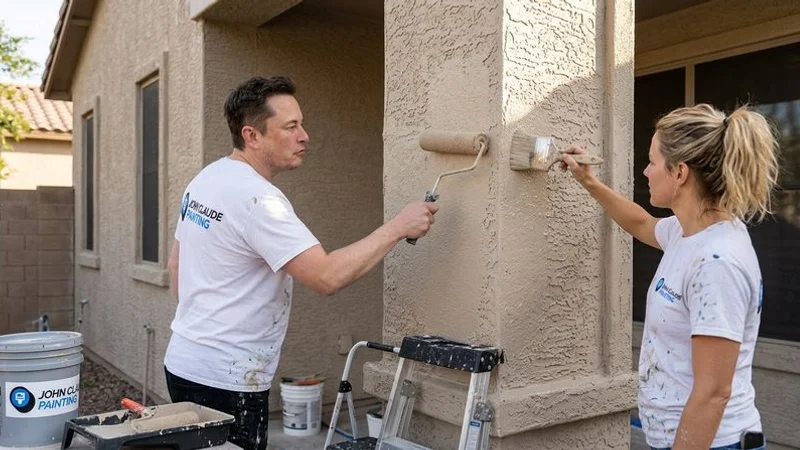
Rendered homes are everywhere across Melbourne, from Edwardian cottages in Northcote to the newer townhouses shooting up around Preston and Footscray. They look beautiful, but their weak point is the same across the city: hairline cracks along the surface that let moisture into the wall.
Elastomeric coatings are the product we reach for when a client wants those cracks properly managed instead of just painted over for two or three years.
What an Elastomeric Coating Actually Is
Standard acrylic exterior paint dries to a film of around 2 to 3 mils (0.05 to 0.08mm). An elastomeric coating is engineered to dry much thicker, typically 10 to 20 mils, and it retains its flexibility long after it has cured.
The key word is elastomer. The dry film can stretch several times its original length and return to shape without rupturing. That flexibility is what lets it bridge the hairline cracks a rendered wall develops as the building heats, cools and settles.
If you want the detailed product and warranty framework, our render painting and repair page walks through the full system we use on Melbourne homes.
Why Melbourne Walls Crack in the First Place
Before we go further, it helps to understand why a rendered wall cracks at all:
- Thermal movement. A north-facing wall in Reservoir can swing from 8°C on a winter morning to 42°C on a summer afternoon. Render expands and contracts along that cycle.
- Structural settling. Older homes in Richmond and Collingwood were built on reactive clay soils that shift with every wet and dry season.
- Original application quality. Render applied too quickly, or in the wrong weather, develops map cracking within the first couple of years.
- Wind-driven rain. Strong southerly fronts push water sideways into any crack wide enough to accept it.
Once water gets behind the render, you are looking at efflorescence blooms, paint blistering, and in the worst cases rotted internal skirting where moisture has tracked through the wall.
Where Elastomerics Earn Their Keep
Bridging Hairline Cracks
A good elastomeric product will bridge cracks up to about 1mm with just the coating itself. With a reinforcing mesh in the problem areas, that tolerance moves closer to 2mm.
That is usually enough to handle the normal crack pattern on a Melbourne rendered home without needing a full resurface.
Stopping Wind-Driven Rain
The thick, pinhole-free membrane is excellent at shrugging off horizontal rain. We regularly put these systems on bay-facing walls in Port Melbourne and Williamstown where salt-laden rain was chewing through the old standard acrylic.
Better UV Durability
The titanium dioxide load in a quality elastomeric is significantly higher than in a standard trade exterior, which means slower fading on west-facing walls and far less chalking at the five-year mark.
The Cost Conversation
An elastomeric system costs more upfront. You are paying for heavier litres per square metre, more material per pass, and a slightly slower application.
Here is a realistic comparison for a typical single-storey rendered home in Melbourne:
| System | Approx. Cost | Expected Lifespan | Annualised Cost |
|---|---|---|---|
| Premium acrylic exterior | $7,500 | 6 to 8 years | ~$1,000 / year |
| Elastomeric system | $10,500 | 10 to 14 years | ~$875 / year |
Across a 20-year window, the elastomeric option almost always works out cheaper, especially once you count the access costs (scaffold, EWP hire, prep time) of a second repaint cycle.
When Elastomeric Is the Wrong Answer
This is where a lot of contractors oversell the product. Elastomerics are not a universal fix, and applied to the wrong substrate they cause more problems than they solve.
We talk clients out of elastomerics when:
- The render is already trapping moisture. If water is getting in from a flashing failure, a leaking gutter or rising damp, sealing the outside of the wall with a thick membrane will make the problem worse.
- The original coating is delaminating. Adding a heavy film over flaking paint just accelerates the peel.
- The render is fresh and still curing. New render needs around 28 days at a neutral pH before a topcoat system goes on.
- The substrate is weatherboard or timber. Elastomerics are a masonry product. Use the right acrylic for timber elements and fascia boards.
- The home is heritage listed and the overlay restricts film build. Some inner-suburb heritage controllers want breathable mineral finishes rather than polymer coatings.
A proper inspection with a moisture meter, a tap-test for drummy render, and a walk around the drainage usually tells us within twenty minutes whether an elastomeric is going to perform.
Preparation Is Non-Negotiable
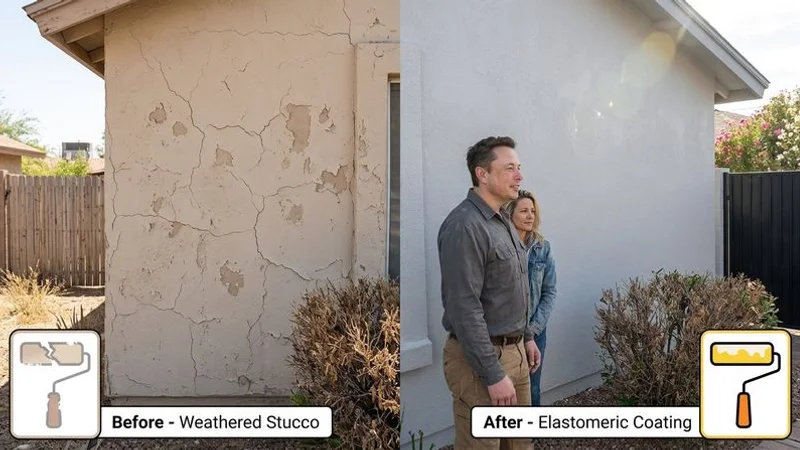
A thick coating cannot rescue a dusty or contaminated wall. The preparation we specify for every elastomeric project includes:
- Low-pressure wash. Removes biofilm, pollution grime, and any loose chalking without driving water into cracks.
- pH check on any new or patched render. We will delay the job rather than paint over alkaline substrate.
- Crack routing and filling. Cracks wider than 1mm get opened slightly with a crack saw, then filled with a flexible polyurethane or acrylic sealant.
- Masonry sealer coat. An alkali-resistant primer locks the surface and gives the topcoats a uniform key.
- Two heavy topcoats, back-rolled. Spraying alone leaves pinholes in rough texture. Back-rolling forces the product into every void.
We also take wet-film thickness readings during application on larger jobs. It is the only way to be sure the finished membrane is actually the thickness the warranty requires.
Products We Like for Melbourne Conditions
- Dulux Acratex Elastomeric. Purpose-designed for Australian rendered walls, great crack bridging, and backed by the Dulux Accredited applicator network.
- Taubmans Tradex Render Coat. A solid mid-tier option with good flexibility for homes on a tighter budget.
- Wattyl Granosite Texture Coat. More common on commercial and strata projects, handy when you need a specific texture match.
Colour choice matters too. Very dark shades absorb more solar energy and stress the coating harder through the daily thermal cycle. On west-facing walls we usually steer clients toward a mid-tone or lighter shade to get more years out of the system.
Making the Call for Your Home
Elastomeric coatings are brilliant on the right home and a mistake on the wrong one. If your rendered walls are developing pattern cracking, if you can see hairlines lifting along the corners, or if the previous paint has started peeling after just a few winters, it is worth getting a proper assessment before committing to another standard repaint.
Contact Paul Painting Melbourne and we will walk the property, test the substrate, and give you a straight recommendation on whether elastomeric is the right fit for your project.
Paul Painting Melbourne Team
Dulux Accredited Painting Contractor
Need Professional Painting Help?
Get a free, no-obligation estimate from our experienced team.
Get Free Estimate