Commercial Painting Costs in Melbourne: What to Actually Budget
Every commercial property manager we meet asks the same thing early in the conversation: what should I actually expect to pay for this repaint?
The honest answer is that commercial painting quotes vary more than almost any other trade because access, prep, product and scheduling all swing the number enormously. Two buildings with the same floor area can be $40,000 apart once you factor in scaffolding, heritage restrictions, or the need to work after hours.
Here is what we at Paul Painting Melbourne see as realistic 2026 numbers for commercial work across the city, and the variables that actually push them up or down.
Commercial Interior Costs
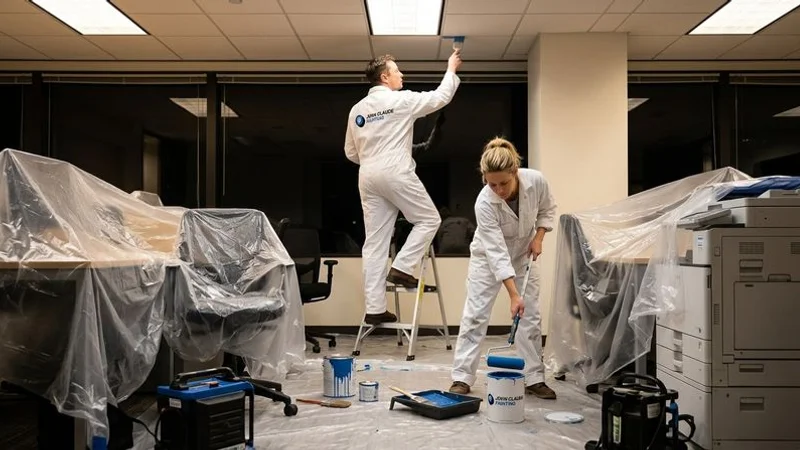
Interior pricing depends far more on access and logistics than on the square metres themselves. A clear-floor shell is fast. A fitted-out office with desks, cabling and display fixtures is slow.
Standard commercial interior repaints in Melbourne currently sit between $18 and $42 per square metre of painted wall surface.
Office Fit-Outs
| Office Size | Typical Price Range | Usual Scope |
|---|---|---|
| Small (under 180 sqm floor) | $4,500 to $9,500 | Walls and architraves |
| Medium (180 to 450 sqm) | $9,500 to $22,000 | Walls, doors, trims, ceiling touch-ups |
| Large (450 to 900 sqm) | $22,000 to $45,000 | Full interior refresh |
| Corporate (900+ sqm) | $45 to $70 per sqm | High-durability finishes, phased zones |
What pushes the number up:
- Furniture shift. Moving workstations, filing cabinets and server racks adds 20 to 30% to labour.
- Dark feature walls. Deep colours like navy, forest green, or branded reds almost always need three coats for full coverage.
- High ceilings. Anything above 3 metres means scaffolding or scissor lifts on hire.
- After-hours loading. Night and weekend work adds 15 to 25% on top of day rates to cover overtime.
Retail Spaces
Retail interiors run 10 to 20% above general office work because the finish is under customer inspection and the masking is far more detailed.
Specific retail factors:
- Low-odour waterbornes so the store can reopen without complaints.
- Scuff-resistant enamels on trolley lines, fitting rooms and counter backs.
- Intricate masking around lighting, stock, displays and signage.
Hospitality and Food Service
Cafes, restaurants and commercial kitchens are the most technically demanding interiors we do. Pricing sits between $35 and $65 per square metre for kitchen and back-of-house work.
The premium covers:
- Washable, high-gloss enamel or epoxy coatings in kitchens and prep areas, in line with food safety requirements. Our epoxy flooring guide has more detail on the flooring side.
- Anti-mould additives in bathrooms and cool rooms.
- Extremely tight working windows - most hospitality jobs happen between 11pm and 8am so the business never loses trade.
Commercial Exterior Costs
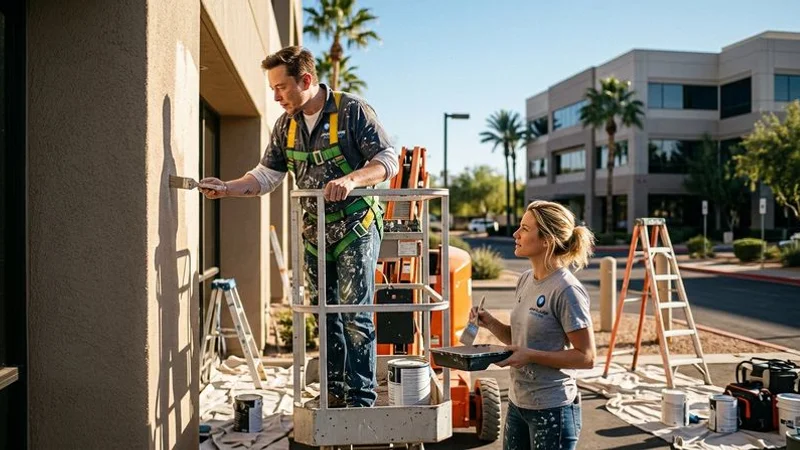
Melbourne commercial exteriors sit in a wider range because access costs vary so much.
| Building Type | Price per sqm (wall area) | Typical Requirements |
|---|---|---|
| Single-storey retail or cafe | $22 to $42 | Wash, prep, spray and back-roll |
| Two-storey office or strata | $32 to $58 | Scaffold or 15m EWP |
| Three-plus storey mid-rise | $48 to $90 | Swing stage, high-risk work licensed operators |
| Industrial and tilt-slab | $15 to $32 | Spray-heavy, minimal detail work |
Render and Brick Repair
Melbourne commercial buildings are overwhelmingly rendered or brick. That means render maintenance costs almost always show up somewhere in the quote.
Common hidden items:
- Crack repair with flexible sealants: $20 to $85 per linear metre depending on severity.
- Elastomeric topcoats that bridge hairline cracks and flex with the building. Roughly 25 to 35% more per litre than standard acrylic, but they stretch the repaint cycle from 7 years out to 12 or more.
- Sealant renewal around window and door perimeters before painting.
- Back-rolling on textured render. Spraying alone leaves pinholes; back-rolling forces paint into the texture.
What Actually Drives the Quote
Building Condition and Prep Level
Prep is where the single biggest price swing lives. Painting over failing material is pointless; every dollar saved on prep comes back as a failure inside two years.
- Level 1 (Good condition): Wash, minor touch-ups, standard topcoat. Base price.
- Level 2 (Moderate): Scraping, spot priming, caulking, filling. Add 15 to 25%.
- Level 3 (Serious): Full strip of failing coatings, major render repair, rotted timber replacement. Add 30 to 60%.
We insist on being upfront about which level your building sits at before quoting, because that single variable changes the project more than anything else.
Product Specification
Material is only about 15 to 20% of the total bid, which is why we never cut corners here. Saving $800 on paint to lose three years of service life is a terrible trade.
Three tiers we use for commercial work:
- Standard commercial acrylic. Dulux Professional Pro Wall, Taubmans 3 in 1 Commercial. Good for interiors and low-exposure exteriors. 6 to 8 year life.
- Premium acrylic. Dulux Weathershield, Haymes Solashield. 10 to 12 year life with better colour retention.
- Elastomeric system. Dulux Acratex. 12 to 15 year life and bridges movement cracks.
Access and Safety Equipment
Getting to the work safely is a real line item:
- EWP hire in Melbourne ranges from $1,600 to $3,800 per week depending on reach and type.
- Scaffolding for a two-storey strata block runs $6,000 to $18,000 depending on elevations and duration.
- High-risk work licences are legally required above 11 metres, and the crew composition changes accordingly.
- Council permits for footpath or laneway occupation in the CBD, South Yarra, or St Kilda can add $500 to $2,500.

How to Get an Accurate Quote
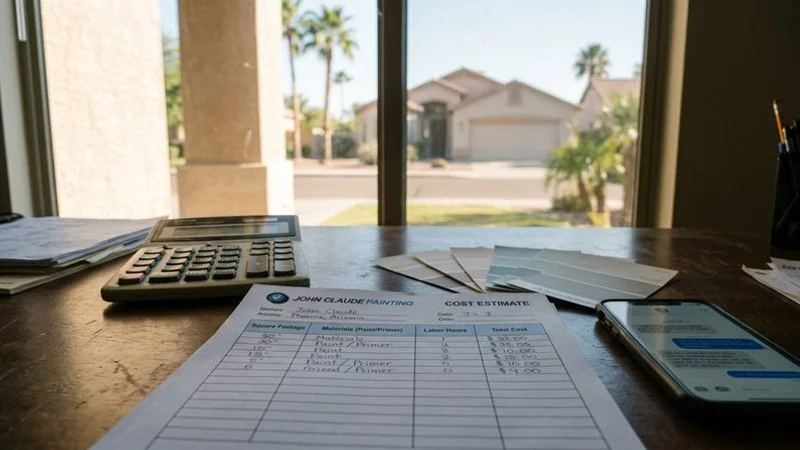
Vague briefs produce vague numbers. The more detail you provide upfront, the tighter the quotes you will receive.
Prep Before You Call Painters
- Define scope clearly. Which walls, ceilings, trims, doors, and external elements are in? Which are out?
- Rough measurements. Floor area and typical ceiling height give a reasonable wall area estimate.
- Photos of damage. Close-ups of cracks, lifting paint, water stains, rotten timber.
- Operating constraints. What hours can we actually work? When are the no-go periods?
- Product preferences. If your portfolio standardises on a specific Dulux or Taubmans line, say so.
Comparing Quotes Line by Line
- Specific product names beat “premium paint” every time.
- Coat count matters. Two finish coats is the minimum for any colour change or weathered surface.
- Prep detail should be spelled out, not hand-waved.
- Warranty should be at least 5 years on exterior work, in writing, with clear definitions of what counts as a defect.
If one quote is 25% lower than the others, check two things: is the access equipment included, and is the same product specified? Nine times out of ten the answer is no.
The Return on a Good Commercial Repaint
A properly executed commercial repaint is one of the few capital works with immediate and measurable returns:
- Asset protection. A waterproof seal prevents the kind of water ingress that damages plasterboard, insulation and internal fittings. Avoiding a single major plasterboard repair job often covers the paint cost.
- Tenant and customer perception. Fresh buildings photograph better and lease faster.
- Energy saving. Light-reflective exterior colours can shave a little off summer cooling loads.
- Longer repaint cycle. Premium systems can double the interval between repaints, halving the lifetime cost.
If you need a proper on-site assessment for your building in 2026, contact Paul Painting Melbourne and we will walk the property with you.
Paul Painting Melbourne Team
Dulux Accredited Painting Contractor
Need Professional Painting Help?
Get a free, no-obligation estimate from our experienced team.
Get Free Estimate